
Partner Portrait Balmangan, Dumfries & Galloway

Balmangan Farm is tucked away on a remote headland south of Kirkcudbright in southwest Scotland, with expansive views across the Solway to the Lake District fells and the Isle of Man. Although Balmangan's 330 acres have been inhabited and farmed from ancient times, Neil and Patricia Picken were the first owner-occupiers in over two hundred years when they took over the farm in 1986, continuing a long tradition of rearing sheep and cattle. In 2007, they diversified into eco-tourism, establishing an award-winning camping and glamping business, Solway View Holidays.
Predominated by rough pasture dotted with scrub, Balmangan is currently grazed by a mix of cattle including the local breed of Belted Galloways. The farm is bordered by an ancient coastal woodland, including a Site of Special Scientific Interest (SSSI) that overlooks Ross Bay. Several ponds have been created over the years and thick hedgerows fringe many of the fields adding greater diversity to the mosaic of habitats.
Neil Picken owns and manages Balmangan with an increasing emphasis on habitat creation and diversification, aided by a reduction in stock numbers.
A more natural approach to grazing has been established, with native breeds at lower densities to help create species-rich grassland.
The longer meadow grasslands are ideal habitat for roe deer. Summer is a time for the roes’ elaborate courtship ritual that involves the doe leading the buck around a tree or bush in tight circles, creating what are known as ‘roe rings’, as she tests his stamina prior to mating.
Brown hares are abundant in Balmangan’s rough pasture, which provides them with bountiful food and plenty of hiding places.
Where fields are left ungrazed for long periods during the summer, wildflowers are able to proliferate.
Meadow buttercups attract a range of pollinators such as brightly-coloured hoverflies.
The frothy, yellow flowers of lady’s bedstraw scent the air of Balmangan's grasslands in summer. When dried, the flower smells of new-mown hay – its name derived from the tradition of stuffing straw mattresses with it, particularly those of women about to give birth.
The flowers of thistles and knapweed attract good numbers of butterflies including meadow brown.
Goldfinches flock to feed on the abundance of thistle seeds in late summer.
Aphids or blackfly that feast on the young fleshy growth of many plants are the favoured food of ladybird larvae – seen here at the top of the plant.
Dense scrub of bramble and gorse is a much underrated habitat that provides vital shelter and sustenance for insects, birds and small mammals.
Bullfinches are just one of many bird species – including song thrushes, blackbirds, dunnocks, linnets, yellowhammers and long-tailed tits – that favour these thickets for nesting.
Branched bur-reed is a quirky-looking wetland plant with spherical flowers that has found a suitable home in one of Balmangan’s damp hollows.

Thanks to an innovative technique called eDNA sampling – where DNA left behind by organisms in their environment is analysed – the largest pond on site has been confirmed as a habitat for great crested newts.
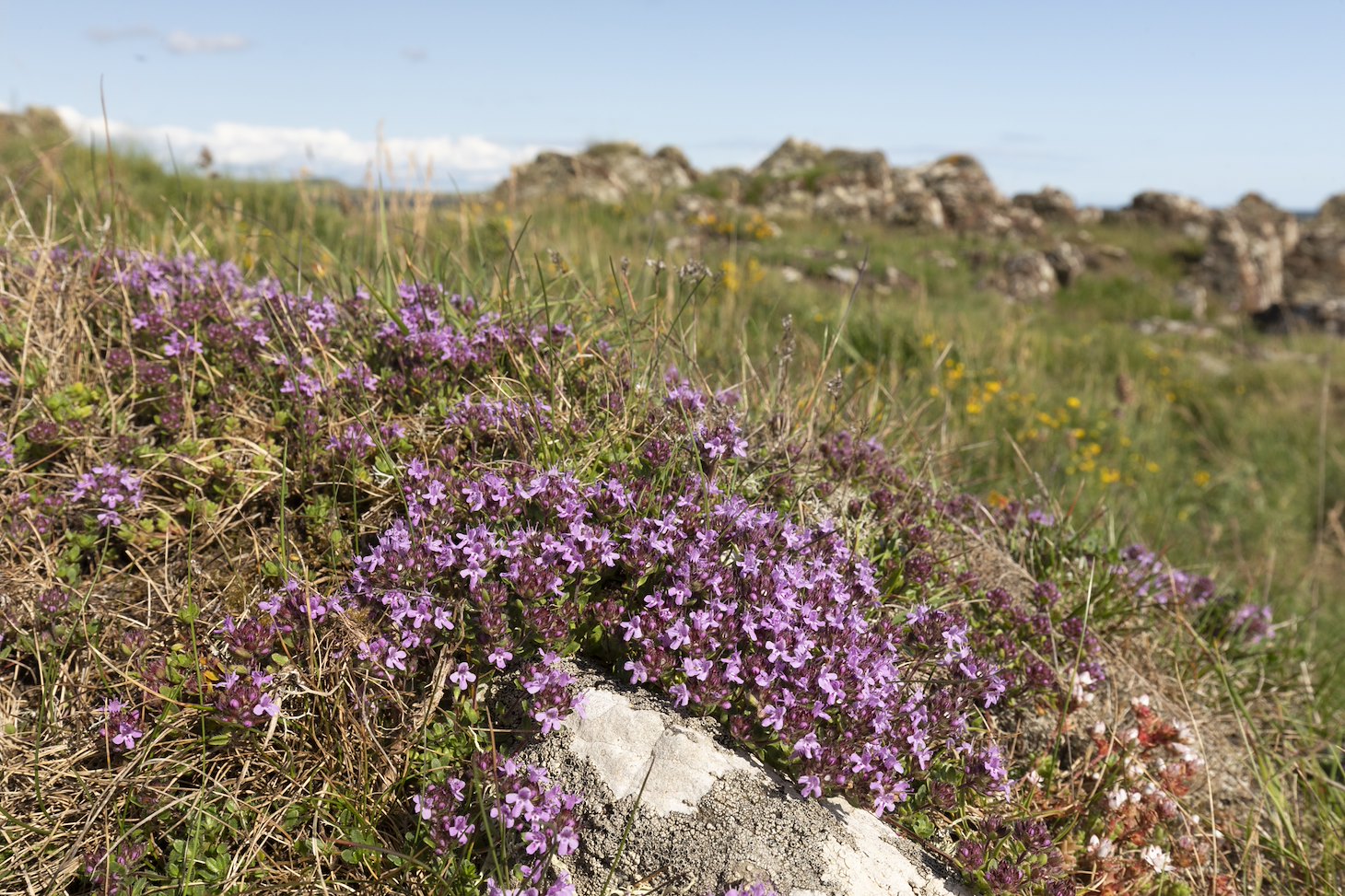
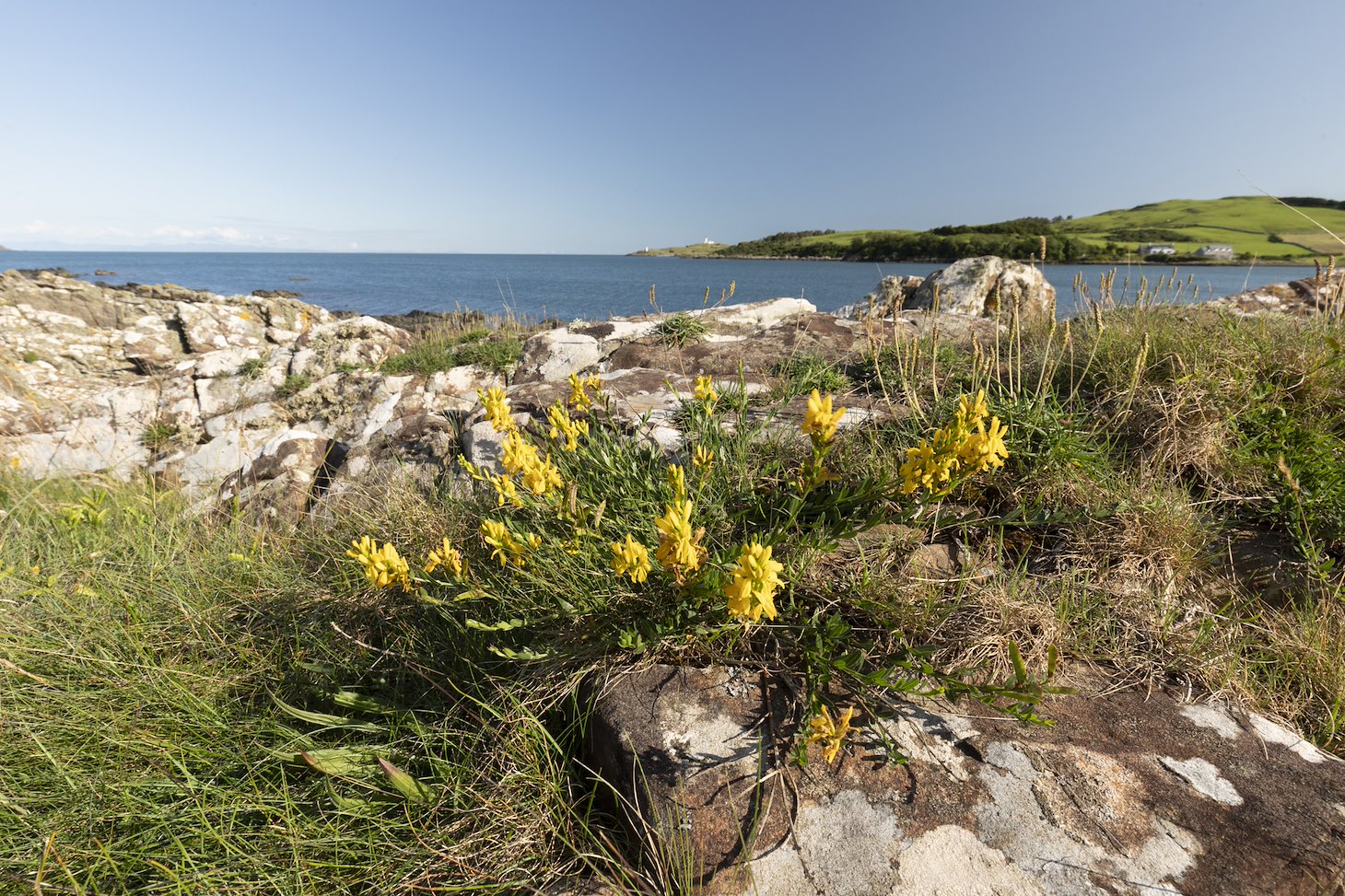
The extensive coastal scrub, sandwiched between the grazing land and the sea, is rich in plant and insect life.
A small breeding herd of belted galloways, alongside the Highland cattle, provide financial as well as ecological benefits.
Balmangan’s picturesque setting, with good local access to Brighouse and Dhoon Bays, provides the ideal location for the Pickens’ ecotourism business.